We run the SPT hammer and push CPT cones into Edmonton's river valley terraces to pull out soil samples that tell a real story. A jar of saturated fine sand on the lab bench looks stable enough until the cyclic stress numbers come back from the triaxial cell. That is when you see the problem. Loose granular deposits below the water table, common along the North Saskatchewan River, turn to fluid when seismic shaking hits. Our lab processes the data through Seed-Idriss simplified procedures and Youd-Idriss 2001 updates. The output is a factor of safety against liquefaction at every depth. No guesswork. Just numbers that let you decide if the ground needs densification, stone columns, or a deeper foundation system before construction starts.
A factor of safety below 1.0 at 4 meters depth changes your foundation design. We find that number before excavation starts.
Scope of work in Edmonton
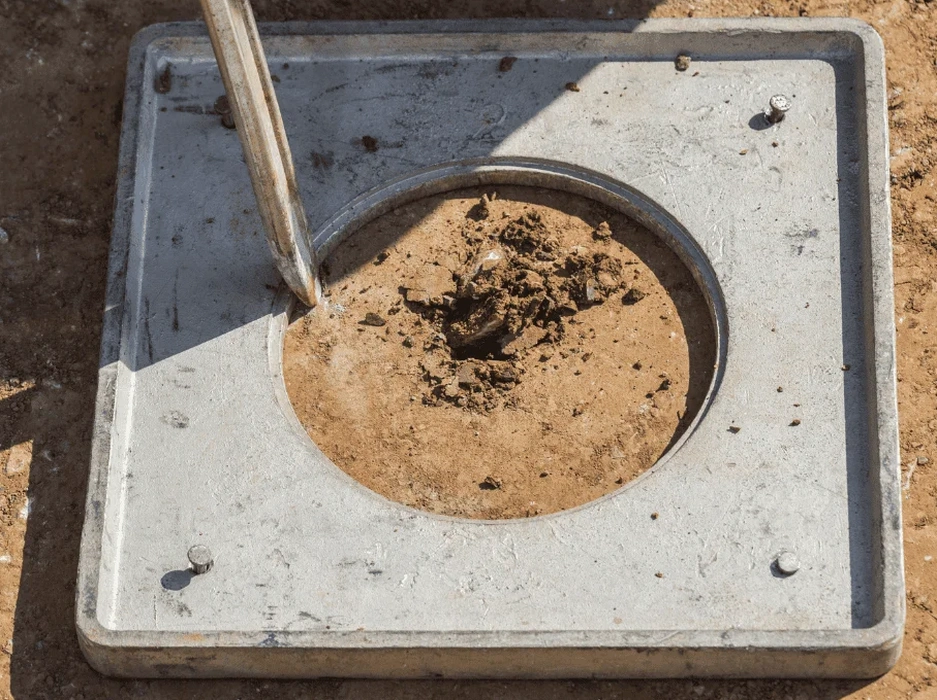
Field demonstration
Typical technical challenges in Edmonton
NBCC 2020 Sentence 4.1.8.16 requires liquefaction assessment for sites underlain by loose saturated granular soils in moderate to high seismic zones. Edmonton's seismic hazard is moderate, but the soil conditions in the river valley and low-lying former lake beds create a real risk that the code does not let you ignore. A structural engineer cannot sign off on a foundation in Seismic Site Class F without a site-specific ground response analysis. That means you need a geotechnical report with the liquefaction numbers. The financial exposure is straightforward: excavation instability, differential settlement, and structural damage to buried utilities. For commercial buildings with basements, the lateral spreading risk against the foundation walls becomes the critical design load case. We deliver the parameters that the structural team needs to design against that load.
Our services
The liquefaction analysis integrates field investigation, laboratory testing, and seismic ground response modeling. These are the core service components for a typical Edmonton project.
Liquefaction Screening and Analysis
We run the full Seed-Idriss procedure using SPT blow counts, CPT tip resistance, or shear-wave velocity data. The deliverable is a depth profile of factor of safety, liquefaction potential index, and estimated post-liquefaction settlement. This is the report your structural engineer needs for NBCC compliance on Site Class E and F soils.
Ground Improvement Design Parameters
Where the analysis shows unacceptable risk, we provide the design parameters for mitigation. This includes target relative density for vibrocompaction, stone column spacing and modulus for stone-columns, or the stiffness and bearing values for a mat foundation that spans across liquefiable zones without relying on deep piles.
Questions and answers
What does a soil liquefaction analysis cost for a typical Edmonton commercial lot?
For a standard commercial site in Edmonton requiring SPT drilling, laboratory testing, and the liquefaction analysis report, the fee typically ranges between CA$3,710 and CA$5,620. The final cost depends on the number of boreholes, the depth to bedrock or competent material, and whether CPT or shear-wave velocity testing is added to supplement the SPT data. We provide a fixed-price proposal after reviewing the site location and project requirements.
How long does the analysis take from field work to final report?
Field work and laboratory testing are typically completed within 2 to 3 weeks. Preliminary findings, including the factor of safety profile, are available within 7 to 10 business days after the drilling crew leaves the site. The final stamped report with settlement estimates and design recommendations follows within another week. We can accelerate the schedule for urgent foundation design deadlines.
Does Edmonton really need liquefaction analysis? I thought the seismic risk was low here.
Edmonton's seismic hazard is classified as moderate under NBCC 2020, but the hazard rating alone is not the deciding factor. The city's extensive deposits of loose saturated sand and silt along the North Saskatchewan River valley and former glacial lake beds are highly susceptible to liquefaction. When the code classifies a site as Seismic Site Class E or F, the structural design provisions require a site-specific assessment. The combination of moderate shaking and liquefiable soil produces the design loads that govern deep foundation and basement wall design. Ignoring it means accepting liability for a failure mode that the code explicitly addresses.