Underground excavations in Edmonton represent a critical segment of geotechnical engineering that encompasses the planning, design, construction, and monitoring of subterranean spaces across the city's unique geological setting. This category covers a wide spectrum of activities, from shallow utility trenches and deep building basements to complex tunnel networks for light rail transit, combined sewer overflow systems, and underground parking structures. The importance of specialized underground excavation expertise in Edmonton cannot be overstated, given the region's variable overburden soils, high groundwater table in many areas, and the increasing density of urban development that pushes infrastructure deeper below grade. Properly executed underground excavations ensure public safety, protect adjacent structures from settlement, and enable the efficient expansion of the city's transportation and utility networks.
Edmonton's subsurface conditions are dominated by glacial and post-glacial deposits overlying Cretaceous bedrock, creating a challenging environment for underground work. The city sits on a sequence of glacial tills, glaciolacustrine clays, and alluvial sands and gravels of varying thickness, often interspersed with lenses of soft, compressible silts and clays. The uppermost layer typically consists of stiff to very stiff glacial till, but deeper excavations frequently encounter the Empress Formation, which includes water-bearing sands and gravels that can destabilize excavation faces. Bedrock in the Edmonton area is primarily the Horseshoe Canyon Formation, comprising interbedded sandstones, siltstones, and mudstones that weather unpredictably when exposed. These conditions demand rigorous geotechnical analysis for soft soil tunnels to assess ground behavior, face stability, and the need for ground improvement before excavation begins.
Regulatory compliance for underground excavations in Edmonton is governed by a combination of provincial and municipal standards. The Alberta Building Code, which adopts the National Building Code of Canada with provincial amendments, sets minimum requirements for excavation support, shoring, and foundation design. The City of Edmonton's Design and Construction Standards provide additional specifications for trenching, backfilling, and underground utility installations within public rights-of-way. Occupational Health and Safety legislation, enforced by Alberta OHS, mandates strict protocols for trench safety, including soil classification, protective systems, and competent person inspections. For deeper excavations and tunnelling projects, engineers must also adhere to the Canadian Foundation Engineering Manual and relevant CSA standards, ensuring that all underground work meets rigorous safety and performance benchmarks.
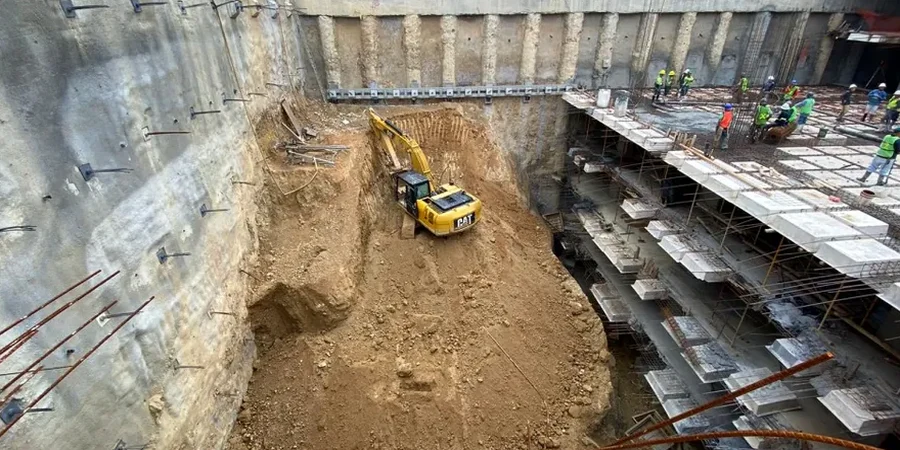
Underground excavation projects in Edmonton span transportation, water management, and commercial development sectors. The Valley Line LRT expansion has involved extensive tunnelling and cut-and-cover stations through variable soil profiles, requiring sophisticated geotechnical design of deep excavations to manage earth pressures and groundwater control. The city's ongoing combined sewer overflow separation program demands deep shaft excavations and microtunnelling beneath existing infrastructure, often in close proximity to sensitive structures. Commercial high-rise developments in the downtown core regularly extend four or more levels below grade, necessitating robust shoring systems and underpinning of adjacent heritage buildings. Throughout these projects, geotechnical excavation monitoring plays a vital role in tracking ground movements, pore water pressures, and structural response to validate design assumptions and enable proactive risk management.
Questions and answers
What are the main geotechnical challenges for underground excavations in Edmonton?
Edmonton's subsurface presents challenges including soft, compressible glaciolacustrine clays that can lead to ground loss and settlement, water-bearing sand and gravel lenses in the Empress Formation that require dewatering, and variable bedrock weathering in the Horseshoe Canyon Formation. High groundwater tables in many areas complicate excavation stability and demand robust waterproofing and drainage systems to prevent inflow and maintain safe working conditions.
What regulations govern underground excavation safety in Edmonton?
Underground excavations in Edmonton must comply with the Alberta Building Code, the City of Edmonton's Design and Construction Standards, and Alberta Occupational Health and Safety legislation. These regulations cover shoring design, soil classification, trench protective systems, and mandatory inspections by competent persons. Deep excavations and tunnels also follow the Canadian Foundation Engineering Manual and relevant CSA standards for structural and geotechnical design.
When is ground improvement necessary before underground excavation in Edmonton?
Ground improvement becomes necessary when excavations encounter soft, saturated silts and clays, loose alluvial sands, or zones with high groundwater inflow potential that could cause face instability or excessive settlement. Techniques such as jet grouting, soil mixing, or dewatering are selected based on the soil profile and proximity to sensitive structures, ensuring stable excavation conditions before major earthworks proceed.
How is excavation monitoring used to reduce risk during underground projects?
Excavation monitoring employs instruments like inclinometers, piezometers, settlement points, and vibration sensors to track ground movements, pore water pressure changes, and structural response in real time. This data allows engineers to verify design assumptions, detect early warning signs of instability, and adjust construction methods or support systems proactively, minimizing the risk of collapse or damage to adjacent infrastructure.