In Edmonton, it is common to see foundation designs that underestimate what lies beneath. The city sits atop complex glacial stratigraphy, from the stiff till of the Penelopine Plain to the soft, compressible clays of the North Saskatchewan River valley. Standard shallow footings often fall short here. At our geotechnical laboratory, we approach pile foundation design by first integrating data from CPT testing to map continuous soil profiles, then validating parameters with grain size analysis to confirm the drainage characteristics of the bearing strata. The result is a deep foundation solution that accounts for specific local conditions.
A pile foundation in Edmonton's glacial till can lose 30% of its predicted capacity if the design ignores the presence of preconsolidated crust layers. We verify, never assume.
Scope of work in Edmonton
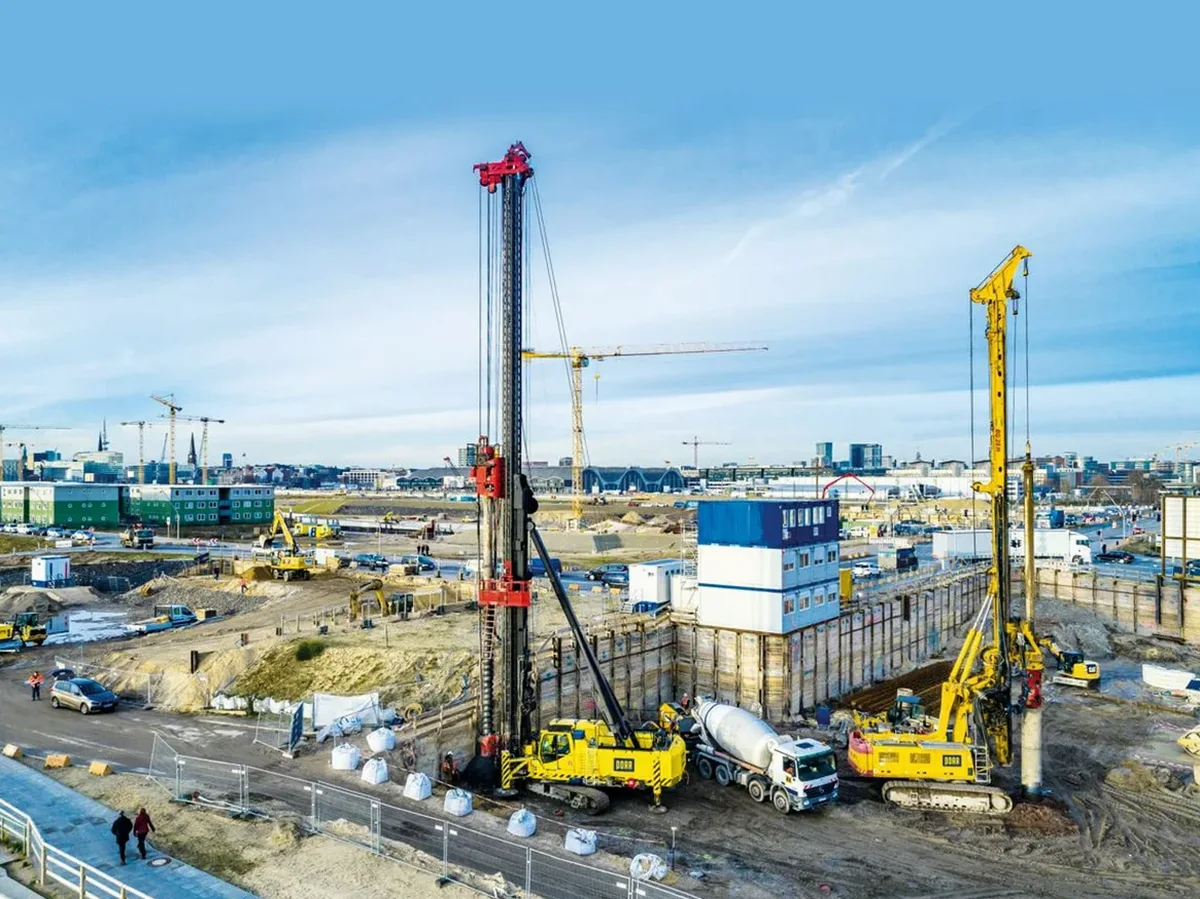
Typical technical challenges in Edmonton
The hydraulic jack assembly for a static load test in Edmonton requires careful setup. We use a 200-tonne capacity ram anchored to a reaction frame, with dial gauges reading to 0.01 mm precision. The biggest risk we see is not equipment failure, but design oversight. Ignoring the presence of a desiccated crust in the upper till can lead to overestimating shaft friction. Another common pitfall is neglecting the long-term settlement of the socket into the underlying shale, especially under sustained dead loads. A pile driving analyzer alone cannot capture these time-dependent effects. That is why our pile foundation design protocols mandate a combination of dynamic testing during installation and a static test on at least one preliminary pile per project. The upfront cost is negligible compared to the liability of a foundation that drifts out of tolerance.
Our services
Our pile foundation design process in Edmonton covers everything from initial geotechnical investigation to final load test interpretation. The three core phases are outlined below.
Geotechnical Site Investigation
Deep borings through glacial till and into bedrock, with SPT and Shelby tube sampling. Laboratory testing includes unconfined compression, triaxial CU, and consolidation tests to define the full stress history of the founding strata.
Axial Capacity Analysis
Static capacity calculations using both total and effective stress methods. We model shaft resistance in clays using the alpha method and end-bearing in till using bearing capacity factors adjusted for local experience. Group efficiency and downdrag from consolidating soils are explicitly quantified.
Load Testing and Verification
Instrumented static load tests with telltales and strain gauges to separate shaft and base resistance. High-strain dynamic testing with CAPWAP signal matching provides immediate feedback on driving stresses and capacity during installation.
Questions and answers
What is the typical cost of a pile foundation design for a project in Edmonton?
How deep do piles need to go in Edmonton to avoid frost heave?
The minimum depth to resist frost heave in Edmonton is 2.4 meters below finished grade, as specified in the Alberta Building Code. However, for structural capacity, piles often extend much deeper, typically 12 to 35 meters, to reach competent glacial till or bedrock. The design must also account for adfreeze forces along the pile shaft within the frost zone.
What is the difference between driven piles and drilled shafts for Edmonton soils?
Driven H-piles work well in the dense glacial till found across much of Edmonton, offering high end-bearing capacity and easy splicing. Drilled shafts or CFA piles are preferred near the river valley where cobbles and boulders make driving difficult, or where vibrations must be minimized. The choice depends on the grain size distribution and the presence of groundwater, which we evaluate during the site investigation.