Edmonton sits at 645 m elevation on complex glacial stratigraphy that makes every borehole a different story. The 2023 downtown construction boom added over 2,500 new residential units, many on deep lacustrine clay and till deposits where presumptive bearing values from the building code are simply not safe. Our team runs SPT drilling with automatic trip hammers calibrated to ASTM D1586-18, recovering split-spoon samples every 1.5 m. When refusal hits on the Saskatchewan Gravels layer, we switch to core barrels and log the contact precisely. For sites near the river valley slopes, we combine SPT data with a slope stability analysis to rule out deep-seated failure surfaces before excavation begins.
An SPT refusal at 9 m on Edmonton till does not guarantee end-bearing capacity until you prove it is not a boulder.
Scope of work in Edmonton
Typical technical challenges in Edmonton
The most common mistake we see on Edmonton sites is terminating SPT boreholes at 6 m because the structural load is light, then discovering a buried preglacial valley filled with soft silt at 9 m during excavation. The North Saskatchewan River valley has buried channels that do not appear on surficial geology maps. A second error is using uncorrected N-values for liquefaction assessment in the city's northeast industrial area, where sand layers below the water table can trigger if N60 drops under 15. Our reports flag every layer where (N1)60 falls below the Youd-Idriss threshold and recommend further testing if the seismic site class per NBCC 2020 requires it.
Our services
Each SPT program in Edmonton is tailored to the specific glacial deposit sequence encountered. These are the core field and lab services we deploy alongside penetration testing.
SPT Drilling with Automatic Hammer
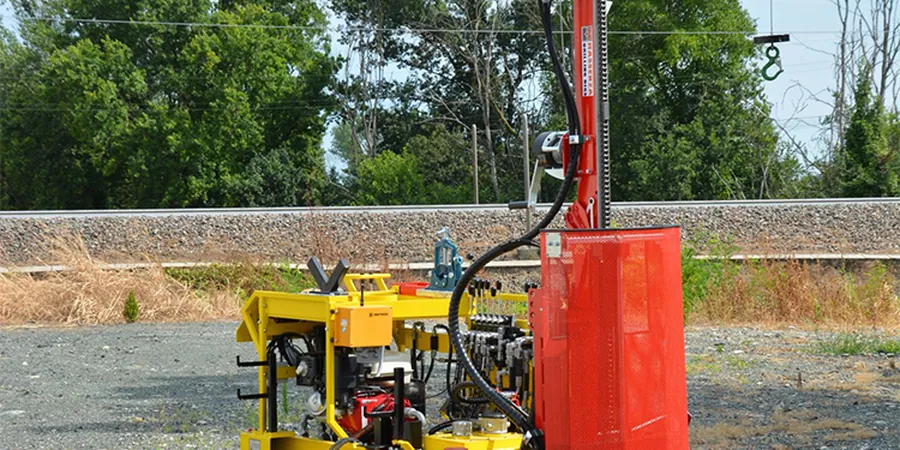
Track-mounted or skid rig with hollow-stem augers. Energy ratio measured with load cell to correct raw N to N60.
Split-Spoon Sampling and Logging
Visual classification per ASTM D2488 on every spoon run. Moisture, consistency, colour, and presence of gravel or cobbles logged at the rig.
Laboratory Index Testing
Moisture content, Atterberg limits, and sieve analysis on selected samples to calibrate field descriptions and feed settlement calculations.
Liquefaction Screening Report
N60 correction, fines content correction, and factor of safety calculation for design earthquake per NBCC 2020 seismic hazard values for Edmonton.
Questions and answers
What is the typical depth for SPT boreholes in Edmonton residential projects?
For single-family homes on strip footings, 6 to 8 m is common, but we always extend at least 2 m into a competent stratum with N60 above 30. Townhouse and low-rise condo projects usually require 10 to 15 m to check for soft layers below the glacial till.
How much does an SPT investigation cost in Edmonton?
Does Edmonton's winter weather affect SPT results?
Yes. Frozen ground can artificially inflate N-values. We pre-drill the frozen crust and record ground temperature at the spoon. Any sample suspected of ice bonding is flagged on the log so the engineer does not misinterpret high blow counts as dense soil.