In Edmonton, the design and analysis of slopes and retaining walls form a critical pillar of geotechnical engineering, directly influencing the safety, longevity, and feasibility of infrastructure and development projects. This category encompasses the specialized assessment of natural and engineered earth structures to prevent soil movement, erosion, and catastrophic failure. Given the city's dynamic landscape, carved by the North Saskatchewan River Valley and its tributary ravines, professionals must address complex soil-structure interactions, ensuring stability for everything from residential properties to major transportation corridors. Services within this scope include active/passive anchor design for deep stabilization, retaining wall design for grade separation, and comprehensive slope stability analysis to model failure risks.
Edmonton's unique geological context presents distinct challenges that make robust slope and wall engineering indispensable. The region is underlain by glacial deposits, primarily the till-like sediments of the Saskatchewan Drift, overlying Cretaceous bedrock such as the Horseshoe Canyon Formation. These soils often consist of interbedded layers of clay, silt, and sand, with the presence of pre-sheared surfaces in high-plasticity clays creating inherent instability. The river valley slopes are particularly susceptible to deep-seated landslides triggered by pore-water pressure buildup during spring melt and heavy rainfall events. Furthermore, the swelling and shrinking behavior of local clay-rich soils, driven by seasonal moisture fluctuations, imposes significant lateral earth pressures on retaining structures, demanding designs that accommodate both drained and undrained loading conditions.
All work within this category must strictly adhere to the regulatory framework set out in Alberta's Building Code, which references national standards including the National Building Code of Canada (NBC) and the Canadian Foundation Engineering Manual (CFEM). Specifically, geotechnical investigations and designs follow CSA A23.3 for concrete structures and CAN/CSA-S6 for highway bridges where applicable. For slope stability, engineers must employ limit equilibrium methods meeting a minimum factor of safety of 1.5 for long-term conditions, as stipulated by local municipal guidelines and the City of Edmonton's Design and Construction Standards. Retaining wall designs must comply with the Alberta Transportation’s Engineering Consultant Guidelines for Highway and Bridge Projects when near public roadways, ensuring seismic considerations per the NBC 2020 seismic hazard maps for the Edmonton area are integrated.
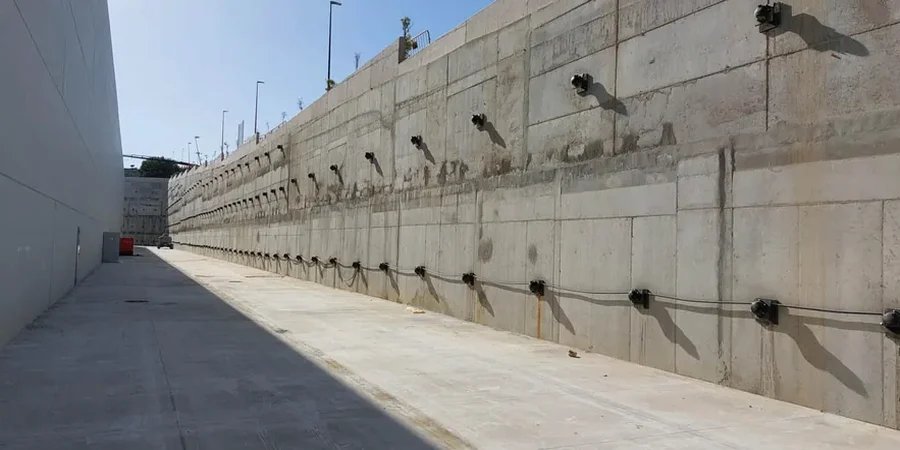
The application of this category spans a diverse array of project types across the Edmonton metropolitan area. Urban infill developments frequently require retaining wall design to maximize buildable space on sloping lots in neighborhoods like Belgravia or Riverdale, where grade changes are steep. Infrastructure projects, such as the Valley Line LRT expansion, rely on deep excavation support and permanent tieback systems, directly involving active/passive anchor design. Municipal conservation authorities mandate slope stability analysis for any construction near the River Valley or ravine system to protect against erosion and preserve the city's extensive trail network. Additionally, industrial developments in the Nisku area and transportation upgrades along Anthony Henday Drive necessitate engineered earth retention solutions to manage high loads and ensure long-term serviceability under cyclic loading from traffic.
Questions and answers
What are the main factors causing slope instability in Edmonton?
Slope instability in Edmonton is primarily driven by the region's glacial geology, featuring high-plasticity clays with pre-sheared surfaces in the Saskatchewan Drift. Seasonal increases in pore-water pressure from snowmelt and rainfall saturate these soils, reducing shear strength and triggering deep-seated landslides, particularly along the North Saskatchewan River Valley and its tributary ravines.
When is a retaining wall required instead of a natural slope?
A retaining wall becomes necessary when site constraints prevent achieving a stable natural slope angle, typically due to property line setbacks, roadways, or infrastructure proximity. In Edmonton, where swelling clays exert high lateral pressures, engineered walls also manage grade changes exceeding 1.2 meters, ensuring compliance with the Alberta Building Code's safety requirements for surcharge loads and global stability.
How do local regulations affect slope and wall design in Edmonton?
Local regulations mandate that designs conform to the Alberta Building Code and the Canadian Foundation Engineering Manual, with the City of Edmonton requiring a minimum long-term factor of safety of 1.5 for slopes. Retaining walls near public infrastructure must follow Alberta Transportation guidelines, and all designs must account for the National Building Code's seismic provisions, despite Edmonton's relatively low seismic hazard.
Why is a specialized geotechnical investigation essential before building on a slope?
A specialized investigation is essential to characterize the complex interbedded glacial soils and identify pre-existing shear planes invisible from the surface. Without it, construction can reactivate ancient landslides or encounter unexpected groundwater, leading to costly failures. This investigation informs the design of mitigation measures like drainage systems or structural anchors, ensuring long-term stability per professional practice standards.