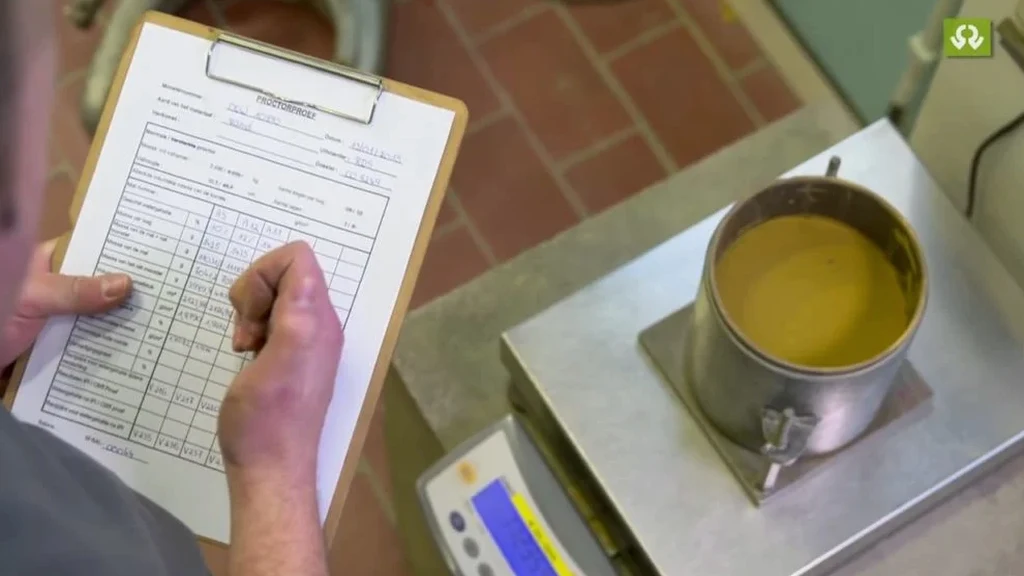
Over 1.5 million people live in the Edmonton metropolitan region, situated at roughly 645 meters above sea level on the North Saskatchewan River valley. Construction here contends with lacustrine clays, glacial till, and sandy alluvial deposits that shift dramatically from one site to the next. The Proctor test quantifies the relationship between moisture content and dry density for these materials, establishing the target compaction values that field crews must achieve. Whether it is Standard Proctor for low-energy applications or Modified Proctor for heavy-duty infrastructure, the laboratory procedure defines the maximum dry density and optimum moisture content specific to each borrow source. This is not a generic benchmark; it is derived from the soil that will actually be placed and compacted on your project. Complementing this with sand cone density testing in the field closes the loop between the lab reference and in-place verification.
Compaction without a Proctor reference is just rolling in the dark.
Scope of work in Edmonton
Typical technical challenges in Edmonton
The glacial Lake Edmonton sediments that underlie much of the city contain sensitive silts and clays that lose structure when remolded at the wrong moisture content. Compacting these soils wet of optimum can trap pore pressure that later dissipates, causing settlement beneath slabs and pavements. On the dry side, insufficient moisture prevents particle rearrangement, leaving a fluffy fabric that collapses under load. The Proctor curve pinpoints the narrow moisture window where density peaks and permeability drops, which matters when the fill must also serve as a low-permeability barrier. Skipping the lab curve and relying on visual judgment on a foggy morning near the river valley has led to over-compaction failures that required removal and replacement, a risk easily avoided with a proper reference test.
Our services
The Proctor test is rarely performed in isolation. The following services support a complete compaction specification package for Edmonton projects.
Standard Proctor (ASTM D698)
Determines the maximum dry density and optimum moisture content using standard compaction energy. Suitable for subgrade preparation, landscaping fills, and lightly loaded slabs where compaction equipment is limited to smaller rollers or plate tampers.
Modified Proctor (ASTM D1557)
Applies higher compaction energy to simulate the effect of heavy vibratory rollers and large haul trucks. This is the reference test for highway embankments, airport runways, and structural fill beneath mat foundations in Edmonton's industrial subdivisions.
Oversize Correction and One-Point Proctor
When the fill contains gravel particles retained on the 19 mm sieve, standard Proctor results require correction using ASTM D4718. A one-point Proctor can also serve as a rapid field check when the full compaction curve has already been established for a consistent borrow source.
Questions and answers
How much does a Proctor test cost in Edmonton?
When should I request a Modified Proctor instead of Standard?
Modified Proctor is specified whenever the fill will support heavy structural loads, highway traffic, or deep fills compacted with large vibratory rollers. Standard Proctor applies to shallow utility trenches, landscaping, and subgrade preparation for residential slabs where compaction energy in the field is lower.
How long does it take to get Proctor test results?
A standard five-point curve can be reported within 48 hours. Expedited service is available for active earthworks where the compaction crew needs the target density and optimum moisture content the same day.